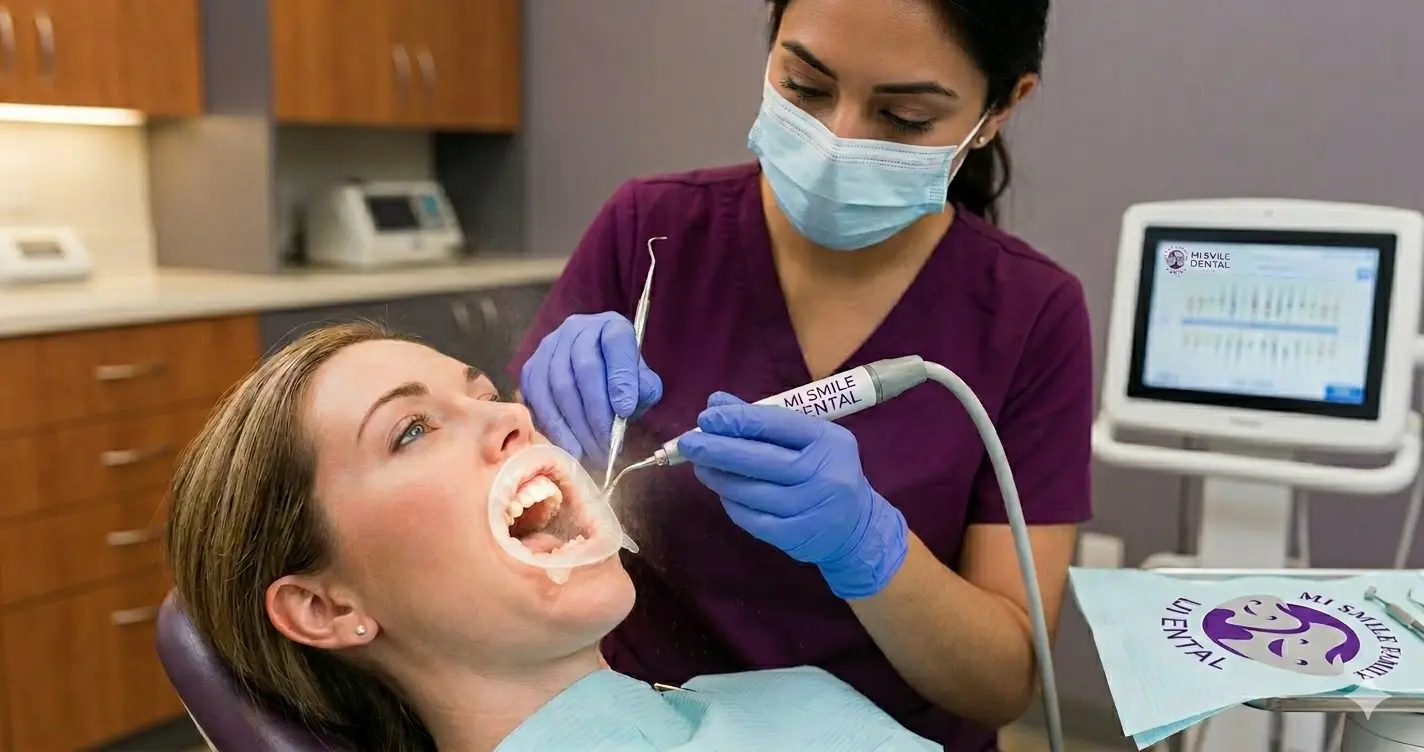
Maintaining good oral health goes beyond regular brushing and flossing. Periodontal deep cleanings, also known as scaling and root planing, are essential procedures that address gum disease and promote a healthier smile.
Understanding Periodontal Health
Healthy gums are the foundation of a strong smile. Periodontal deep cleanings involve two key components: scaling and root planing.
Scaling
Scaling is a dental procedure involving the removal of dental plaque, tartar (calculus), and other debris from the surfaces of the teeth, particularly along and below the gum line. It is performed as part of regular dental cleaning or as a therapeutic procedure to treat gum disease.
Root Planing
Root planing involves smoothing out the surfaces of the roots of the teeth using specialized instruments. This removes remaining plaque and calculus and eliminates rough spots on the roots. Smooth root surfaces prevent bacteria from reattaching and promote healing of gum tissue.
When Are Periodontal Deep Cleanings Necessary?
Your dentist may recommend a deep cleaning if any of these signs are present:
- Bleeding Gums – Could be a sign of gingivitis, the earliest stage of gum disease.
- Swollen or Tender Gums – Inflammation or redness may suggest the presence of gum disease.
- Persistent Bad Breath – Chronic halitosis can result from bacteria associated with gum disease.
- Pain or Discomfort – Especially when chewing or brushing.
- Deep Pockets Between Teeth and Gums – Measured during a periodontal examination; deeper pockets indicate disease.
- Visible Tartar Buildup – Yellowish or brownish deposits near the gumline require professional removal.
The Importance of Periodontal Deep Cleanings
- Preventing Gum Disease – Addresses gingivitis and periodontitis before they lead to tooth loss.
- Reducing Gum Inflammation – Removes the plaque and tartar that cause inflammation.
- Preventing Tooth Loss – Untreated gum disease is a leading cause of tooth loss.
- Improving Breath Odor – Eliminates the bacterial source of persistent bad breath.
- Enhancing Overall Oral Health – Supports the stability of teeth and surrounding structures.
What to Expect During the Procedure
- Preparation – Review of medical history and thorough oral examination.
- Anesthesia – Local anesthesia may be used for comfort during deeper cleaning.
- Scaling – Specialized instruments remove deposits above and below the gum line.
- Root Planing – Root surfaces are smoothed to discourage bacterial reattachment.
- Post-Treatment Instructions – You'll receive guidance on oral hygiene and any prescribed medications.
- Follow-Up Appointments – Scheduled to monitor healing and determine if further treatment is needed.
Schedule Your Appointment Today!
If you suspect you may benefit from a periodontal deep cleaning, don't hesitate to schedule a consultation with Mi Smile Family Dental. Dr. Maddipati and her team are here to guide you toward a healthier, happier smile.